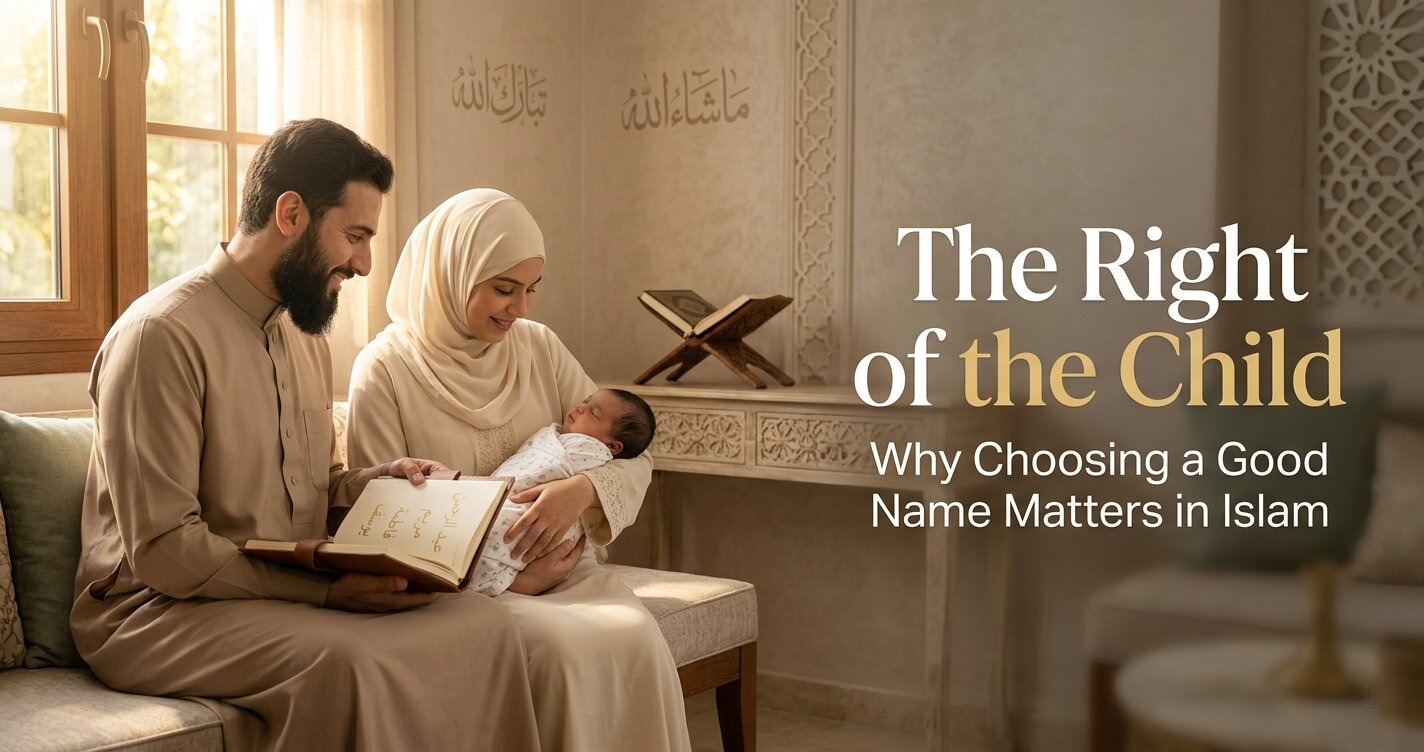
The Right of the Child: Why Choosing a Good Name is an Obligation
One of the very first gifts parents give their child is a name. In Islam, this gift is not a small or casual decision — it is a responsibility, an amanah, and one of the fundamental rights of the child.
A name carries identity, meaning, honor, and spiritual influence. It is spoken in love, written in records, called on the Day of Judgment, and remembered throughout a person’s life. Islam places deep importance on choosing names that are beautiful, meaningful, and pleasing to Allah.
Sadly, many parents today select names based only on trends, celebrity influence, or social media popularity without understanding their meanings or Islamic significance. This article explores why choosing a good name is considered one of the rights of a child in Islam and how Muslim parents can fulfill this beautiful responsibility.
Children Are an Amanah from Allah
In Islam, children are not possessions — they are trusts from Allah سبحانه وتعالى. Parents are responsible for nurturing them physically, emotionally, and spiritually.
Just as parents care about a child’s food, education, and safety, Islam teaches that a child’s identity and dignity must also be protected. A good name becomes part of that dignity.
The Prophet Muhammad ﷺ emphasized kindness and mercy toward children in every aspect of life. Giving a child a meaningful and honorable name is one of the earliest acts of love and care.
Why Names Matter So Much in Islam
Names are not just labels in Islam. They often carry meanings connected to faith, character, worship, strength, gratitude, beauty, or righteousness.
The Prophet Muhammad ﷺ encouraged Muslims to choose good names and even changed names that carried negative or inappropriate meanings. This shows how seriously Islam views the emotional and spiritual effect of names.
A beautiful name can inspire confidence, honor family heritage, and remind a child of Islamic values throughout life.
Parents should remember that a child may carry this name for an entire lifetime. Choosing wisely is an act of mercy and responsibility.
The Child’s Right to a Good Name
Islamic scholars mention that among the rights of children upon their parents is receiving a good name. This right reflects the respect and honor Islam gives to every human being from birth.
A poor or embarrassing name can emotionally affect a child for years. It may become a source of mockery, discomfort, or identity confusion. Islam prevents this harm by encouraging names with positive and noble meanings.
Choosing names connected to prophets, companions, righteous people, or beautiful Arabic meanings can spiritually motivate children as they grow older.
Qualities of a Good Islamic Name
Positive Meaning
The name should carry a beautiful and respectful meaning connected to goodness, faith, strength, purity, kindness, or gratitude.
Islamically Appropriate
The name should not contain meanings that oppose Islamic beliefs or promote arrogance, evil, or shirk.
Easy and Respectful
A name should be dignified, easy to pronounce, and something the child can carry proudly throughout life.
Connected to Islamic Heritage
Many Muslim parents choose names of prophets, Sahaba, righteous women, or names mentioned in the Quran to strengthen Islamic identity.
The Emotional Impact of a Name
Every time parents lovingly call their child by name, that name becomes part of the child’s emotional world. A meaningful name can make a child feel respected, valued, and connected to family and faith.
Imagine a child learning that their name belongs to a prophet, a companion of the Prophet ﷺ, or carries a beautiful meaning like patience, light, wisdom, or sincerity. This creates emotional attachment and pride in Islamic identity.
In a world where identity confusion is common, meaningful Muslim names help children remain connected to their roots and values.
Mistakes Parents Should Avoid
- Choosing names without checking their meanings
- Selecting names only because they are trendy
- Using names with arrogant or inappropriate meanings
- Choosing extremely difficult spellings or pronunciations
- Ignoring Islamic guidance in favor of celebrity culture
A Name is a Lifelong Dua
In many ways, a child’s name becomes a lifelong prayer. Every time the name is spoken, its meaning is remembered. Names connected to goodness and faith can positively influence a child’s heart and personality over time.
This is why Muslim parents should approach naming with thoughtfulness, sincerity, and love — not pressure or trends.
A beautiful Islamic name is not just an identity. It is a gift, a right, and a reflection of the parents’ hopes for their child’s future in both dunya and akhirah.