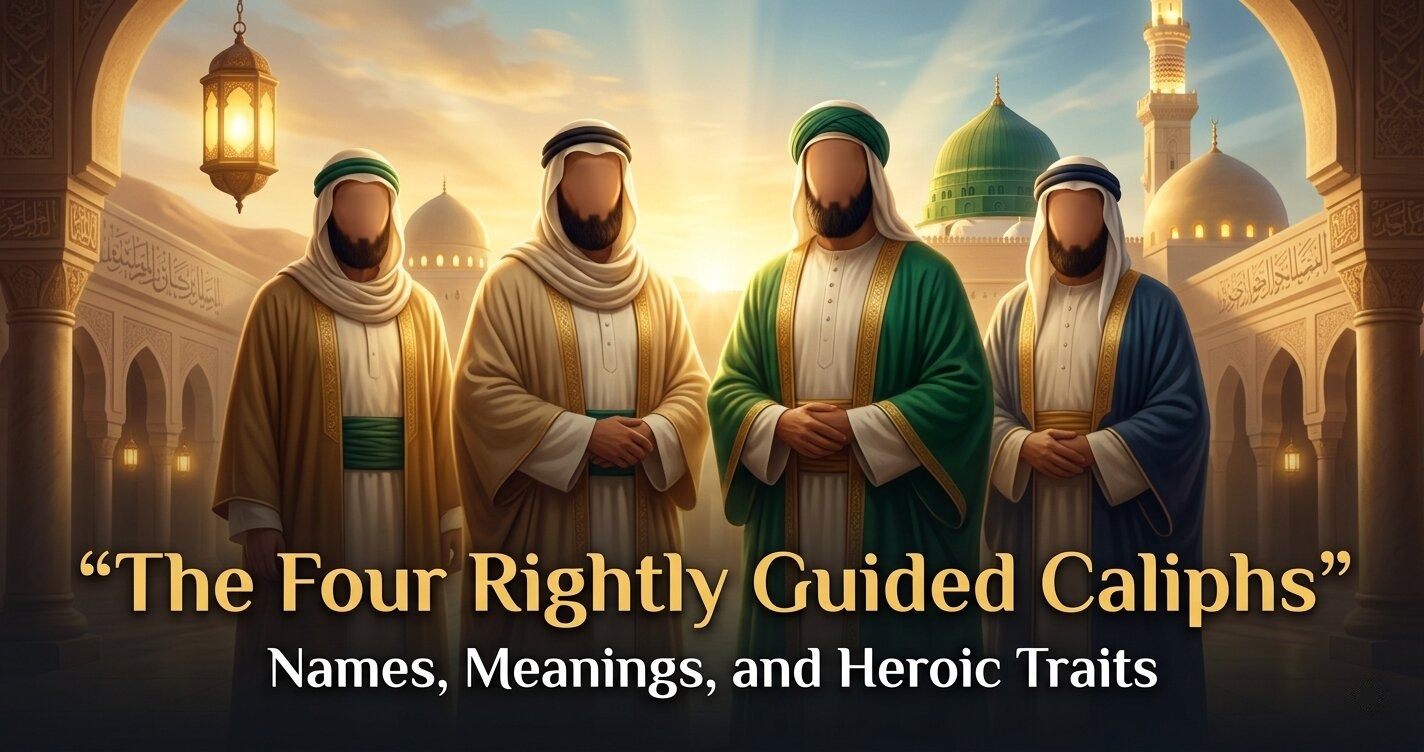
The Four Rightly Guided Caliphs: Names, Meanings, and Heroic Traits
The lives of the Four Rightly Guided Caliphs continue to inspire Muslims around the world through their faith, wisdom, courage, humility, and devotion to Islam.
Islamic history is filled with noble personalities whose names carry deep spiritual and emotional meaning. Among the most respected figures after Prophet Muhammad ﷺ are the Four Rightly Guided Caliphs, known as the Khulafa Rashidun. These great leaders guided the Muslim Ummah during one of the most important periods in Islamic history.
Their names are not only remembered because of political leadership, but because of their honesty, sacrifice, bravery, mercy, and unwavering faith in Allah. For many Muslim parents today, naming a child after these honorable companions is a way to connect future generations with Islamic values and noble character.
Who Were the Four Rightly Guided Caliphs?
The Four Rightly Guided Caliphs were the closest companions and successors of Prophet Muhammad ﷺ after his passing. They led the Muslim community with justice, wisdom, and sincerity while preserving the teachings of Islam.
The four caliphs were:
- Abu Bakr As-Siddiq (RA)
- Umar ibn Al-Khattab (RA)
- Uthman ibn Affan (RA)
- Ali ibn Abi Talib (RA)
Each of them possessed unique strengths and heroic qualities that shaped the future of the Islamic world.
1. Abu Bakr – The Truthful and Loyal Friend
Abu Bakr As-Siddiq (RA) was the closest friend of Prophet Muhammad ﷺ and the first caliph of Islam. His title “As-Siddiq” means “The Truthful One,” because he firmly believed in the Prophet ﷺ even when others doubted.
Meaning of the Name
The name Abu Bakr is associated with wisdom, early leadership, and loyalty. It symbolizes sincerity and unwavering faith.
Heroic Traits
- Unshakable faith in Allah
- Kindness and humility
- Generosity toward the poor
- Leadership during difficult times
Abu Bakr’s calm strength reminds Muslims that true leadership begins with honesty and trust in Allah.
2. Umar – The Symbol of Justice and Strength
Umar ibn Al-Khattab (RA) is remembered as one of the strongest and most fearless leaders in Islamic history. His rule expanded the Islamic world while establishing systems of justice and fairness.
Meaning of the Name
The name Umar is connected with life, strength, and long-lasting impact. It remains one of the most beloved Muslim boy names worldwide.
Heroic Traits
- Justice and fairness
- Courage and discipline
- Protection of the weak
- Strong moral character
Umar’s leadership teaches Muslims that power should always be guided by compassion and accountability before Allah.
3. Uthman – The Gentle Leader with a Pure Heart
Uthman ibn Affan (RA) was known for his modesty, generosity, and gentle personality. He played a major role in preserving the Quran in written form for future generations.
Meaning of the Name
The name Uthman carries a sense of dignity, nobility, and grace. It has remained respected across Muslim cultures for centuries.
Heroic Traits
- Extreme generosity
- Patience during hardship
- Humility and modesty
- Dedication to preserving Islam
Uthman reminds believers that gentleness and kindness are also forms of strength in Islam.
4. Ali – The Lion of Allah
Ali ibn Abi Talib (RA), cousin and son-in-law of Prophet Muhammad ﷺ, was famous for bravery, wisdom, and deep knowledge of Islam. He is admired for both his strength in battle and his spiritual understanding.
Meaning of the Name
The name Ali means “high,” “elevated,” or “noble.” It reflects honor, dignity, and spiritual greatness.
Heroic Traits
- Fearlessness and bravery
- Wisdom and intelligence
- Deep faith and spirituality
- Loyalty to truth and justice
Ali’s life teaches Muslims that true courage comes from faith, wisdom, and sincere devotion to Allah.
Why These Names Continue to Inspire Muslim Families
Choosing a name connected to the companions of Prophet Muhammad ﷺ is more than a cultural tradition. It is a spiritual connection to Islamic history and noble character.
These names carry timeless values that Muslim parents hope their children will reflect — honesty like Abu Bakr, justice like Umar, generosity like Uthman, and bravery like Ali.
In a rapidly changing world, such names remind Muslim children of their identity, faith, and the importance of living with dignity, compassion, and devotion to Allah.
The Lasting Legacy of the Khulafa Rashidun
The Four Rightly Guided Caliphs built the foundations of Islamic civilization with sincerity and sacrifice. Their leadership was not based on wealth or power alone, but on service to Islam and care for humanity.
Their names continue to echo across generations because they represent qualities every Muslim admires — courage, patience, wisdom, mercy, and unwavering faith in Allah.
Naming children after these great companions is a beautiful way to honor Islamic history while inspiring future generations to follow the path of righteousness and good character.
Frequently Asked Questions
Who were the Four Rightly Guided Caliphs?
They were the first four leaders of the Muslim Ummah after Prophet Muhammad ﷺ: Abu Bakr, Umar, Uthman, and Ali (RA).
Why are their names popular among Muslims?
Their names are associated with noble Islamic values such as honesty, justice, bravery, wisdom, and generosity.
Which caliph was known for justice?
Umar ibn Al-Khattab (RA) is especially remembered for his fairness, strong leadership, and commitment to justice.
Is it good to name children after the companions of the Prophet ﷺ?
Yes. Many Muslim families choose these names because they honor righteous individuals who played an important role in Islamic history.