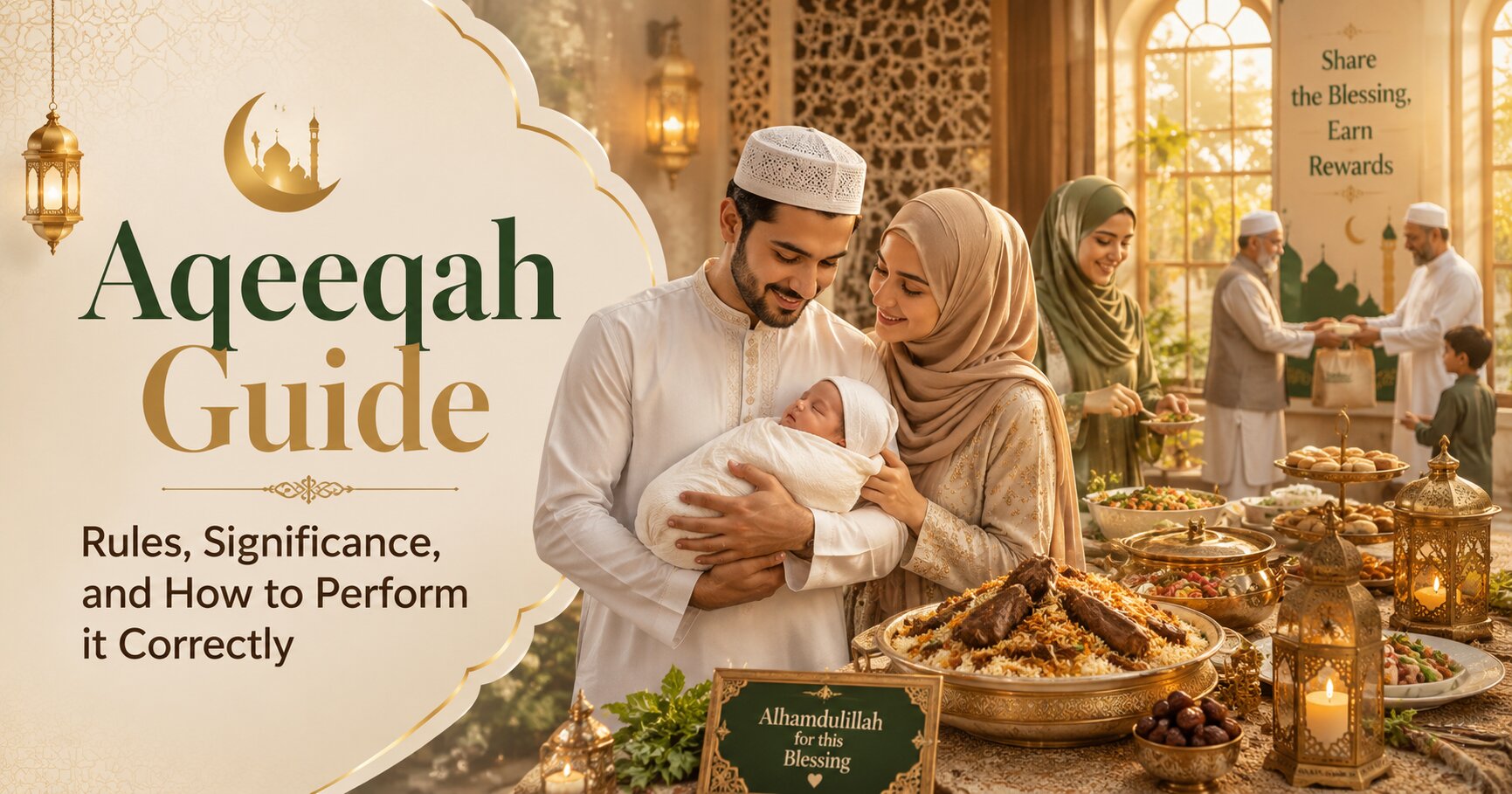
Aqeeqah Guide: Rules, Significance, and How to Perform it Correctly
The birth of a child is one of Allah’s greatest blessings. In Islam, Aqeeqah is a beautiful Sunnah that combines gratitude, charity, celebration, and spiritual connection during the earliest days of a child’s life.
What is Aqeeqah?
Aqeeqah is the Islamic sacrifice performed after the birth of a child as an expression of thankfulness to Allah. It is a highly recommended Sunnah practiced by Prophet Muhammad ﷺ.
Traditionally, Muslims sacrifice animals and distribute the meat among family members, friends, neighbors, and the poor. This creates joy, strengthens family ties, and spreads kindness in society.
The Spiritual Significance of Aqeeqah
Islam teaches parents to begin their child’s life with remembrance of Allah. Aqeeqah reflects humility and gratitude for the precious gift of a child.
It also teaches generosity. Feeding relatives, neighbors, and the needy reminds families that blessings become more meaningful when shared with others.
When Should Aqeeqah Be Performed?
The preferred day for Aqeeqah is the seventh day after the child’s birth. On this day, Muslims are encouraged to:
Name the Child
Choose a meaningful Islamic name
Shave the Hair
Give charity equal to the hair’s weight in silver
Perform Aqeeqah
Distribute meat among people
If the seventh day is missed, Aqeeqah may still be performed later according to many scholars.
How Many Animals Should Be Sacrificed?
According to Sunnah:
- Two goats or sheep for a baby boy
- One goat or sheep for a baby girl
However, if parents cannot afford two animals for a boy, many scholars allow sacrificing one animal.
Rules for the Sacrifice
The animals used for Aqeeqah should meet similar conditions as Qurbani animals:
- The animal should be healthy
- It should not have major defects
- The sacrifice should be performed humanely
- Allah’s name should be mentioned during sacrifice
How to Distribute Aqeeqah Meat
One of the most beautiful aspects of Aqeeqah is sharing food with others. The meat may be:
Shared with Family
Celebrate together with loved ones
Given to Neighbors
Strengthen community relationships
Distributed to the Poor
Spread blessings to those in need
Many families also organize meals and invite relatives and friends to celebrate the newborn’s arrival.
A Sunnah Filled with Love and Gratitude
Parenthood changes a person’s heart forever. Holding your newborn for the first time brings emotions that words can barely describe — joy, responsibility, fear, gratitude, and hope all at once.
Aqeeqah teaches Muslim parents to begin this journey by turning toward Allah. It reminds us that children are not possessions; they are trusts given by Allah to nurture with love, faith, and good character.
Whether your Aqeeqah celebration is large or simple, what matters most is sincerity. Allah looks at the intention behind every act of worship.