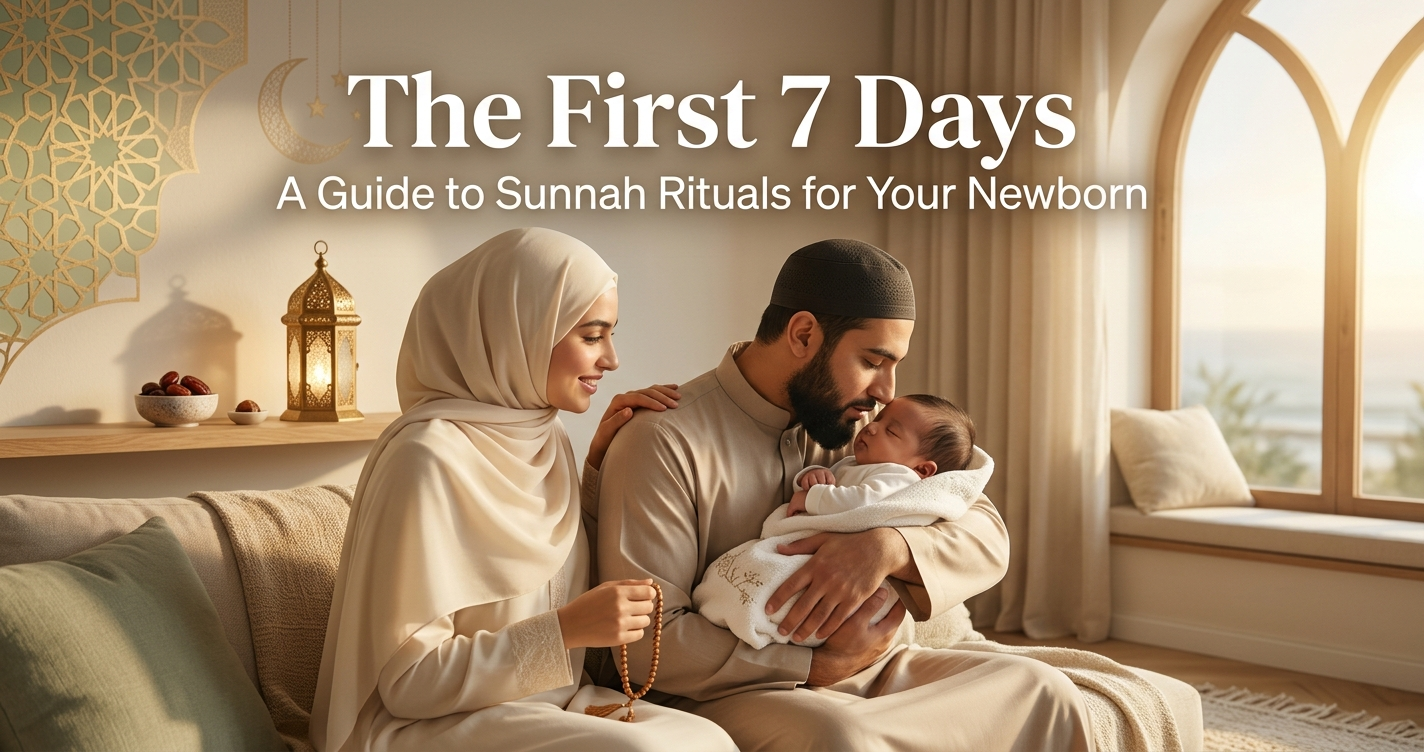
The First 7 Days: A Guide to Sunnah Rituals for Your Newborn
Welcoming a child into the world is one of the most emotional and blessed moments in a Muslim family’s life. Islam beautifully guides parents through the first seven days with acts filled with love, gratitude, mercy, and spiritual connection.
1. Giving Adhan in the Baby’s Ear
One of the first Sunnahs after birth is softly reciting the Adhan in the baby’s right ear. This beautiful act introduces the child to the remembrance of Allah from the very first moments of life.
Imagine your newborn hearing the words "Allahu Akbar" before anything else in this world. It symbolizes that faith, prayer, and Allah’s remembrance should always remain at the center of their life.
2. Tahneek: A Sunnah of Blessing
Tahneek is the practice of rubbing softened dates gently on the newborn’s palate. The Prophet Muhammad ﷺ performed this for many newborn children brought to him by the companions.
It is a Sunnah filled with tenderness and barakah. If possible, a righteous elder or knowledgeable family member may perform it.
3. Choosing a Beautiful Islamic Name
Naming a child is one of the greatest responsibilities of parents. In Islam, names are not chosen only for beauty or trend — they carry meanings, identity, and spiritual value.
The Prophet ﷺ encouraged giving children good names. Names connected to Allah’s worship, the Prophets, the companions, and righteous people are especially beloved.
Muhammad
The Praised One
Fatimah
Captivating & Pure
Yusuf
A Prophet Known for Beauty & Patience
4. Shaving the Baby’s Hair
On the seventh day, it is Sunnah to shave the newborn’s hair. Parents are encouraged to give charity equal to the weight of the hair in silver.
This act teaches humility, cleanliness, and generosity from the very beginning of the child’s life.
5. Performing Aqiqah
Aqiqah is the sacrifice performed to thank Allah for the blessing of a child. Traditionally, two goats are sacrificed for a boy and one for a girl if financially possible.
The meat is shared with family, friends, and the needy, turning the child’s birth into a moment of community, gratitude, and charity.
The Emotional Beauty Behind These Sunnahs
The first seven days after birth can feel overwhelming for new parents. Sleepless nights, emotional moments, and the responsibility of caring for a tiny soul can create both joy and anxiety.
Islam does not leave parents alone in this journey. These Sunnah practices are reminders that Allah’s mercy surrounds the family from the very beginning.
Every whisper of Adhan, every dua made while holding your baby, every tear of gratitude, and every act of charity carries immense reward.
Your child is an amanah — a trust from Allah. The first seven days are not simply traditions; they are the foundation of a spiritually connected home filled with love, mercy, and remembrance of Allah.